Summer is approaching, so install an evaporative cooling system in your chicken coop: give your flock a cool summer.
As temperatures gradually rise, the footsteps of summer are clearly audible. For poultry farmers, this means the most challenging season of the year is about to arrive. In high temperatures, chickens experience decreased feed intake, slower growth, and reduced egg production; in severe cases, it can even lead to heat stress and death. How can you prepare before the sweltering heat arrives? Installing an efficient evaporative cooling system is the most urgent and worthwhile investment.

Why is evaporative cooling the best choice for summer cooling?
The core of an evaporative cooling system—the evaporative cooling pad—utilizes the physical principle of water evaporation absorbing heat, which can lower the temperature of the air entering the chicken coop by 7-10°C. This cooling effect is achieved through the unsaturated nature of the air and the heat absorption properties of water evaporation, not the water temperature itself—a principle that is often misunderstood but crucial.
When hot outside air passes through the evaporative cooling pad, the evaporation of water removes a significant amount of heat from the air. For every 38 liters of water evaporated, approximately 92,600 kilojoules of heat are removed from the air, equivalent to the heat produced by burning 3.8 liters of propane. This means that the evaporative cooling system doesn’t “blow cold air,” but rather “creates cold air.”

How an Evaporative Cooling System Works:
A complete evaporative cooling system consists of three parts:
Cooling Pad Wall: Installed on the side of the chicken house’s air inlet, typically a 15 cm thick cooling pad.
Negative Pressure Fan: Installed on the opposite gable wall, it draws air out of the house, creating negative pressure.
Water Circulation System: Includes a water pump, water pipes, and a water collection tank, ensuring the evaporative cooling pads remain continuously moist.
When the fan starts, negative pressure is created inside the house, forcing outside air through the moistened evaporative cooling pads. As the air passes through the pads, moisture evaporates, absorbing heat and lowering the air temperature, while simultaneously increasing humidity, ultimately providing cool, fresh air to the chicken house.



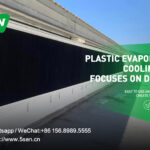 Choosing PVC-Framed Evaporative Cooling Systems for Greenhouses and Poultry Houses
 Fresh Air Inlets: Optimizing the Poultry House Environment
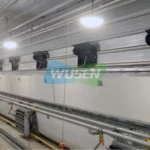 Fresh Air Inlets for Poultry Houses
 Plastic Evaporative Cooling Pads: A Transformative Solution for Poultry Farming and Greenhouse Climate Control
 Integrated PVC Frame Evaporative Cooling System