Categories
- Blog (260)


Livestock farms require specially customized air filters designed to suit their unique operating environments—specifically, high dust concentrations, high humidity, and the need to maintain a stable airflow to ensure animal comfort. The following are several of the most common and effective types of air filters found in modern livestock facilities, each playing a distinct role within a multi-stage filtration system:
Typically constructed from pleated paper, synthetic fiber media, or oil-impregnated cotton gauze, primary filters are primarily responsible for capturing the fine dust and smaller particles that eluded the pre-cleaners. Synthetic fiber filters are particularly prevalent in livestock farms due to their durability, moisture resistance, and ability to maintain balanced airflow—characteristics that are crucial for sustaining optimal ventilation within humid barn environments. In contrast, while paper filters offer exceptionally high filtration efficiency (capable of capturing up to 99% of airborne particles) and are highly cost-effective for general livestock applications, they require relatively frequent replacement in extremely dusty environments. Oil-impregnated cotton gauze filters, on the other hand, offer the advantage of reusability and provide excellent airflow permeability; although they are well-suited for heavy-duty operating environments, they do require periodic cleaning and re-oiling.

For livestock farms with stringent air quality control requirements—such as breeding centers, boar studs, or facilities housing high-value livestock—high-efficiency filters are an essential component of the filtration system. HEPA (High-Efficiency Particulate Air) filters are capable of capturing up to 99.97% of fine particles—as small as 0.3 microns—including pathogens, allergens, and fine dust; as such, they represent an ideal choice for preventing the transmission of infectious diseases. Although HEPA filters offer unparalleled protection, their high airflow resistance results in relatively high energy consumption; consequently, they are typically utilized in conjunction with pre-filters and primary filters to optimize performance and reduce maintenance costs.


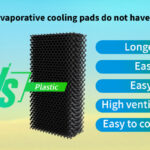 Comparison of Paper and Plastic Evaporative Cooling Media
 See you in Cairo—WUSEN is exhibiting at AGRENA Middle East 2026!
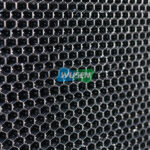 Why are plastic pads replacing paper ones?
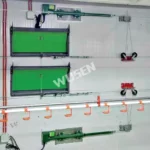 Poultry House Ventilation: WUSEN 908 Poultry Air Inlet
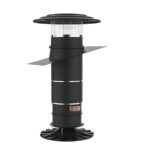 Optimizing Livestock Housing Ventilation: WS-T Series Chimney-Style Intake Fans