Categories
- Blog (260)


High summer temperatures are the number one killer in greenhouse cultivation. When greenhouse temperatures exceed 35°C, the photosynthesis of most crops declines significantly; pollination is hindered, fruit quality deteriorates, and in severe cases, entire plants may even wither and die.
Traditional ventilation and cooling methods can only lower the temperature to match that of the outdoors. However, during the scorching summer months, outdoor temperatures often already exceed 35°C, rendering such cooling methods woefully inadequate.
Evaporative cooling technology is currently recognized as the “ace solution” in the field of greenhouse cooling. It can lower the greenhouse temperature to a level below the ambient outdoor temperature, all while consuming only one-tenth of the energy required by traditional air conditioning systems. This technology has now been established as a standard component of greenhouse environmental control systems.

When air comes into contact with water, the water absorbs heat from the air and evaporates into water vapor; consequently, the air cools down. This is the exact same principle behind the cooling sensation we experience after sweating on a hot summer day.
A simple analogy: Air acts like a “sponge”—the drier the sponge, the greater its capacity to absorb water. When dry air passes through a water-saturated cooling pad, it “greedily” absorbs moisture while simultaneously drawing heat away from the air; the resulting airflow is, naturally, cool.

The evaporative cooling system is currently the most widely adopted evaporative cooling solution in greenhouse applications. The system consists of four main components: a cooling wall (cooling pad), a circulating water pump, water supply piping, and negative-pressure exhaust fans.
Workflow: The negative-pressure exhaust fans draw air out of the greenhouse interior, creating a negative pressure differential. This forces the hot outdoor air to flow through the cooling pads and enter the greenhouse. As the air passes through the cooling pads, it comes into full contact with the water film; the water evaporates, absorbing heat and thereby cooling the air. This cooled air then flows through the greenhouse, absorbing internal heat, before being expelled through the exhaust fans. Key Design Parameters:
Wet Pad Thickness: 15 cm offers the best cost-performance ratio (10 cm yields slightly inferior results, while 20 cm—though highly efficient—creates significant airflow resistance).
Air Velocity Across the Pad: Approximately 1.5 m/s is optimal (excessively high air speeds actually hinder the cooling process).
Wet Pad Area: Must be matched to the airflow capacity of the exhaust fans to ensure that all incoming air passes through the wet pad.


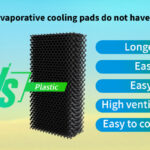 Comparison of Paper and Plastic Evaporative Cooling Media
 See you in Cairo—WUSEN is exhibiting at AGRENA Middle East 2026!
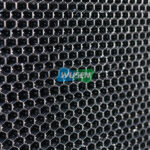 Why are plastic pads replacing paper ones?
 Poultry House Ventilation: WUSEN 908 Poultry Air Inlet
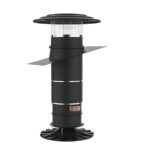 Optimizing Livestock Housing Ventilation: WS-T Series Chimney-Style Intake Fans