Categories
- Blog (260)


If you have ever used paper evaporative cooling pads, you are likely all too familiar with this cycle: they work well the first year; by the second year, their cooling efficiency drops significantly; and by the third year, they begin to collapse, become clogged, and even harbor various microorganisms—the kind you’d rather not think about. At this point, you are forced to purchase new pads, arrange for labor to replace them, and suffer the loss of a full day of production. While the pads themselves are relatively inexpensive, the true cost lies in the downtime and the significant hassle involved in the replacement process.
Plastic cooling pads operate on the same principle as paper ones—evaporative cooling—but they are made from materials that will not rot, collapse, or dissolve, even in environments with hard water. Their core advantage is that they transform what is traditionally a “disposable consumable” into a durable piece of equipment that, once installed, requires little to no further attention.
Service Life: A Key Consideration
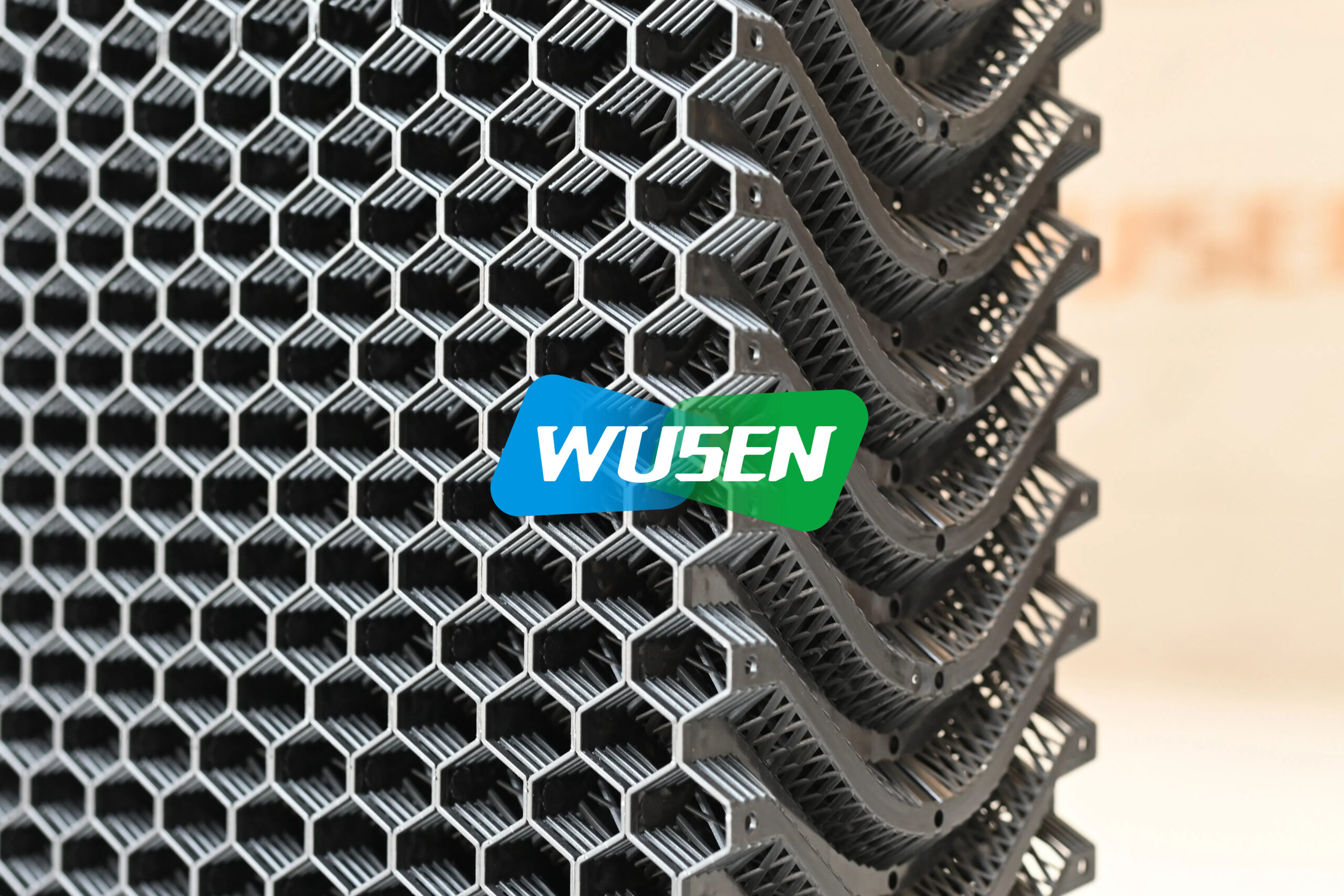
Paper cooling pads inevitably degrade over time because water is their “natural enemy.” Calcium and magnesium ions in the water form scale, while the cellulose fibers soften upon absorbing moisture, eventually leading to structural collapse. In contrast, plastic cooling pads—made from polypropylene—do not absorb water, are resistant to mold growth, and are UV-stabilized for outdoor use. According to manufacturers and industry experts, plastic cooling pads can last anywhere from eight to fifteen years—or even longer—under normal operating conditions, whereas paper pads typically require replacement every two to three years. Although the initial investment for plastic pads is higher, they offer a clear economic advantage over a ten-year lifecycle.
Cleaning Is No Longer a Hassle
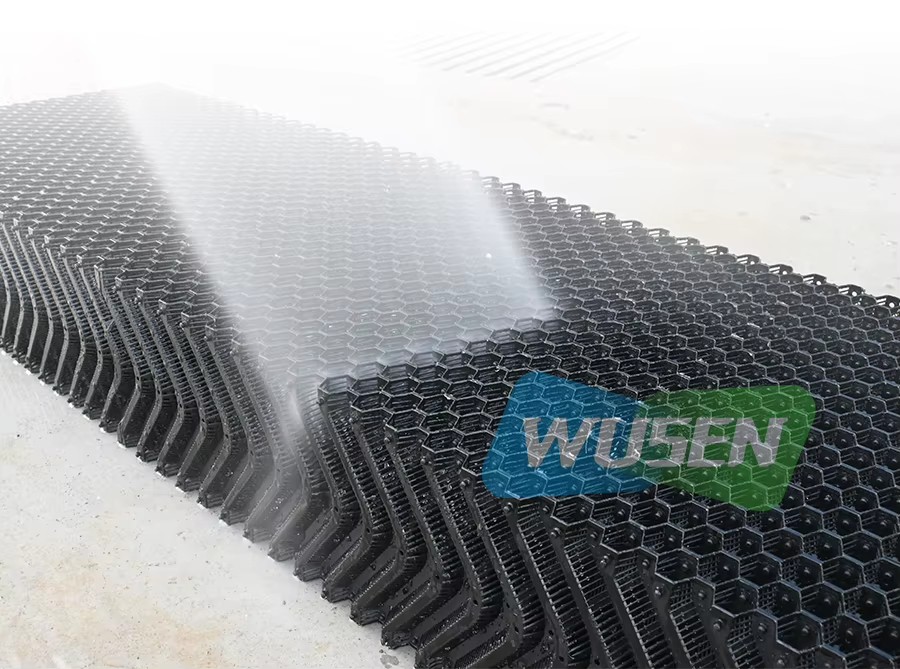
Paper cooling pads cannot be thoroughly cleaned; high-pressure washing damages their structure, while low-pressure rinsing fails to remove mineral scale. Plastic cooling pads, however, can be cleaned directly with a high-pressure washer—effectively removing sand, dust, and mineral deposits without causing any damage to the pads themselves. If your water source has high hardness or your environment is particularly dusty, this distinction will fundamentally change your maintenance routine: cleaning tasks that once required delicate, painstaking effort can now be handled with a simple rinse.
Consistent Cooling Performance
Once cleaned, plastic evaporative cooling pads achieve an evaporation efficiency of 80% to 85%, bringing the temperature of incoming air close to the wet-bulb temperature. Under normal operating conditions, the cooling capacity of plastic pads is on par with that of brand-new paper-based pads. Their true advantage lies in long-term performance: unlike paper pads, which lose cooling efficiency over time, plastic pads maintain their effectiveness. Their structural design prevents sagging, softening, or deformation under pressure—they remain in like-new condition even after five years of use.
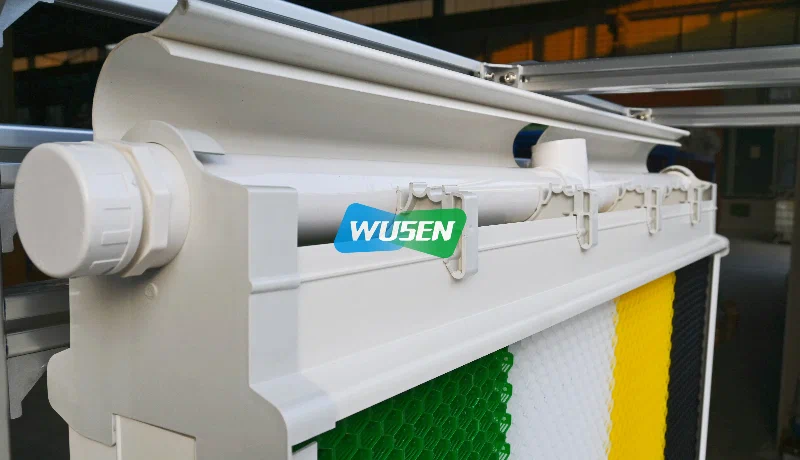
A technical detail worth noting: plastic, unlike cellulose (paper) material, is not inherently absorbent or wicking. Water must be distributed evenly across the top of the pad so that it flows down through every individual channel (corrugated groove). This necessitates a well-designed water distribution system: it requires a higher water flow rate than paper-based systems, clear and unobstructed distribution outlets, and a properly matched water pump. If you are retrofitting an existing system that currently uses paper pads, be sure to check your water pump and distribution piping first, rather than assuming the issue lies with the pads themselves.
Ideal Applications for Plastic Cooling Pads
Plastic pads are the preferred choice in regions with hard water. While mineral scale acts as a “silent killer” for paper-based pads, plastic material is fully capable of withstanding such conditions. They are also excellent for dusty environments, as they can be washed directly without sustaining any damage. Plastic pads are an ideal solution for facilities such as poultry houses, greenhouses, and industrial workshops—places where the cooling season is long and maintenance labor is limited. If you are tired of the annual pre-summer ritual of inspecting your cooling pads and worrying about whether they will last another season, plastic pads offer a definitive solution to that problem.


 Comparison of Paper and Plastic Evaporative Cooling Media
 See you in Cairo—WUSEN is exhibiting at AGRENA Middle East 2026!
 Why are plastic pads replacing paper ones?
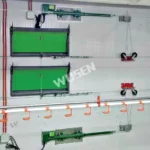 Poultry House Ventilation: WUSEN 908 Poultry Air Inlet
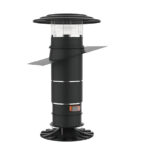 Optimizing Livestock Housing Ventilation: WS-T Series Chimney-Style Intake Fans