In livestock production, environmental control is not merely a matter of comfort; it is a fundamental requirement for both economic profitability and animal welfare. Fuel and energy costs consistently rank among the largest expenses for producers, while air quality directly influences respiratory health, feed conversion rates, and mortality. The challenge lies in maintaining a continuous supply of fresh air while simultaneously preserving warmth and preventing cold drafts. Polyurethane ceiling air inlets, installed within the attic space, offer a precisely engineered solution to this long-standing dilemma.
Attic Preheating: Enhancing Energy Efficiency and Air Quality
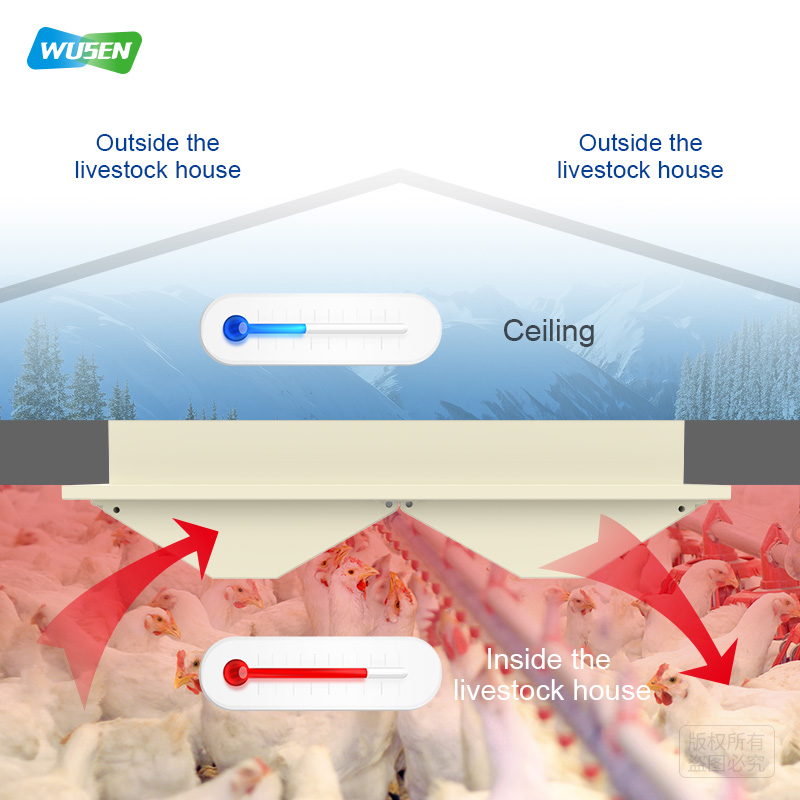
The operating principle is simple yet highly effective. In most broiler and swine facilities, the attic space functions as a “solar collector.” Research has quantified this advantage: during the critical early stages of livestock or poultry growth, the air temperature in the attic is typically 6°C higher than the outside temperature; in colder weather, this difference can reach as much as 20°F (approximately 11°C). By drawing ventilation air from this preheated attic space—rather than directly from the cold outdoors—producers can reduce heating fuel requirements by approximately 20% to 25%. Some studies even indicate that the operating time of forced-air heating systems can be reduced by as much as 45%.
The benefits extend well beyond fuel savings. Air inlets that utilize attic air help maintain lower humidity levels within the facility—a crucial advantage, as high humidity is a primary driver of elevated ammonia concentrations and the deterioration of bedding or litter. A drier environment directly alleviates respiratory stress on the animals and lowers the disease burden—an outcome that no medication can replicate, achievable only through sound ventilation engineering.

Precision Control: The Advantages of a Dual-Flap Design
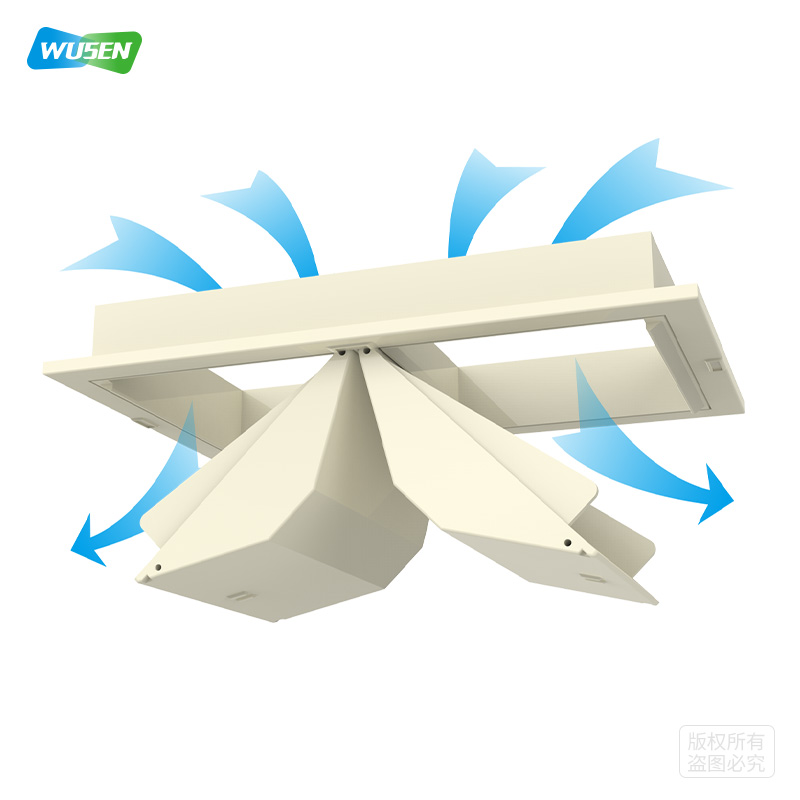
While the attic space provides the foundational conditions for efficiency, the design of the air inlet hardware itself determines whether this potential is successfully translated into tangible benefits. A key feature of these polyurethane ceiling air inlets is their “dual-flap” (or dual-shutter) configuration. The two-pane, synchronized shutter system allows farmers to exercise precise control over ventilation volume and airflow patterns. This is far more than a mere aesthetic choice. In environments with fluctuating climates, the ability to finely adjust the opening of the air inlets—rather than relying on simple “open/closed” shutters—enables a gentler intake of air. This prevents cold air from plunging directly downward or creating localized drafts—factors that can cause stress to animals and disrupt temperature uniformity within the facility—while simultaneously optimizing ventilation quality.
Beyond the dual-pane configuration, the system incorporates curved deflectors within the hopper-style shutter panels. This geometric design is critical for air distribution: the curved surfaces redirect the incoming airflow, preventing fresh air from falling vertically onto the animals and instead guiding it laterally toward the center of the enclosure. This facilitates thorough mixing of the fresh air with the warmer air in the animal-occupied zone, eliminates stagnant “dead zones,” and ensures that fresh air reaches the animals without creating drafts.
Polyurethane Construction: Thermal Insulation, Sealing, and Biosecurity
Material selection is just as vital as mechanical design. The comprehensive properties of polyurethane make it exceptionally well-suited for the demanding environment of livestock housing. Its extremely low thermal conductivity creates an effective insulating barrier, preventing the inlet frame itself from becoming a “thermal bridge” for heat loss. This effectively resolves the condensation issues frequently encountered with metal inlets or those with poor thermal insulation. By maintaining the surface temperature of the inlets close to the ambient indoor temperature, polyurethane units fundamentally prevent condensation from forming and dripping—thereby eliminating a persistent source of indoor moisture, bacterial proliferation, and mold growth.
Furthermore, when the ventilation system is not actively exhausting air, the inlets must effectively block the entry of dust, drafts, and pathogens. This air inlet is equipped with high-quality sealing strips and a locking mechanism. When the damper is closed, the sealing system ensures an airtight shut-off, preventing unintended air infiltration and heat loss. From the perspectives of biosafety and durability, the polyurethane surface is smooth and non-porous, while the frame offers excellent corrosion resistance—capable of withstanding the high humidity and high ammonia concentrations typical of livestock housing—thereby ensuring a long service life and simplifying cleaning and disinfection procedures.


 How to Eliminate Cold Drafts in Your Livestock Barn Using Ceiling Inlets
 Enhancing Poultry House Ventilation: WUSEN Tunnel Air Inlet Solutions
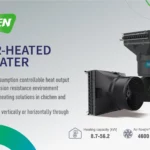 Optimizing Livestock Climate Control: The WUSEN Water-Heated Air Heater
 What Are Plastic Evaporative Cooling Pads?
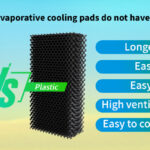 Comparison of Paper and Plastic Evaporative Cooling Media
