In agriculture, maintaining optimal environmental conditions is crucial for the health and productivity of livestock and horticultural crops. Evaporative cooling systems, which utilize the natural process of water evaporation to lower air temperature, have long been a cornerstone of climate control in greenhouses and poultry houses. While cellulose-based paper cooling pads have been the industry standard for decades, a new contender has emerged: plastic evaporative cooling pads. Made from polypropylene (PP) material, these pads offer a unique set of advantages and challenges, reshaping cooling strategies in the agricultural sector.
Core Technology
Plastic evaporative cooling pads operate on the same principle as paper pads: air flows through a wetted medium, causing water to evaporate and absorb heat from the air. However, their design and material properties differ significantly.
Modern plastic cooling pads typically feature a double-layer corrugated or honeycomb structure, which increases the contact area between water and air, thereby enhancing cooling performance. This design aims to optimize water distribution and evaporation efficiency.

Performance Characteristics
Cooling Efficiency
The cooling performance of plastic pads is comparable to that of new paper pads. Field studies indicate that, under similar conditions, the intake air temperature and relative humidity achieved with plastic pads are very close to those of traditional cellulose pads. Cooling efficiency depends heavily on pad design; some studies show that certain plastic media can achieve saturation efficiencies exceeding 80%.

Durability and Maintenance
A key advantage of plastic cooling pads is their long service life. While traditional paper pads typically last three to four years, plastic pads can last seven to eight years or even longer. Their synthetic materials are resistant to corrosion, mold, and pests, and can withstand temperatures ranging from 75°C to 100°C.

Maintenance is also simpler. Plastic pads can be easily cleaned with high-pressure water jets to remove dust and mineral deposits, and their cooling efficiency does not decline over time as it does with paper pads. Furthermore, plastic pads effectively resist damage from birds and rodents—a common issue in agricultural environments.
Pressure Drop
At the same airflow velocity, plastic pads typically exhibit a lower pressure drop than cellulose pads. A study on evaporative cooling pads found that plastic pads have a pressure drop 51% to 94% lower than that of cellulose pads. This reduced air resistance helps save energy for ventilation fans.



 Why are plastic pads replacing paper ones?
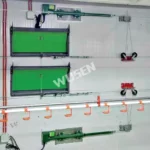 Poultry House Ventilation: WUSEN 908 Poultry Air Inlet
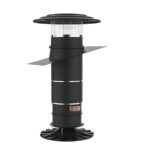 Optimizing Livestock Housing Ventilation: WS-T Series Chimney-Style Intake Fans
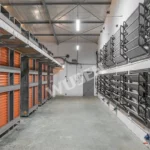 Tunnel Air Inlets for Poultry Houses – WUSEN
 Choosing PVC-Framed Evaporative Cooling Systems for Greenhouses and Poultry Houses